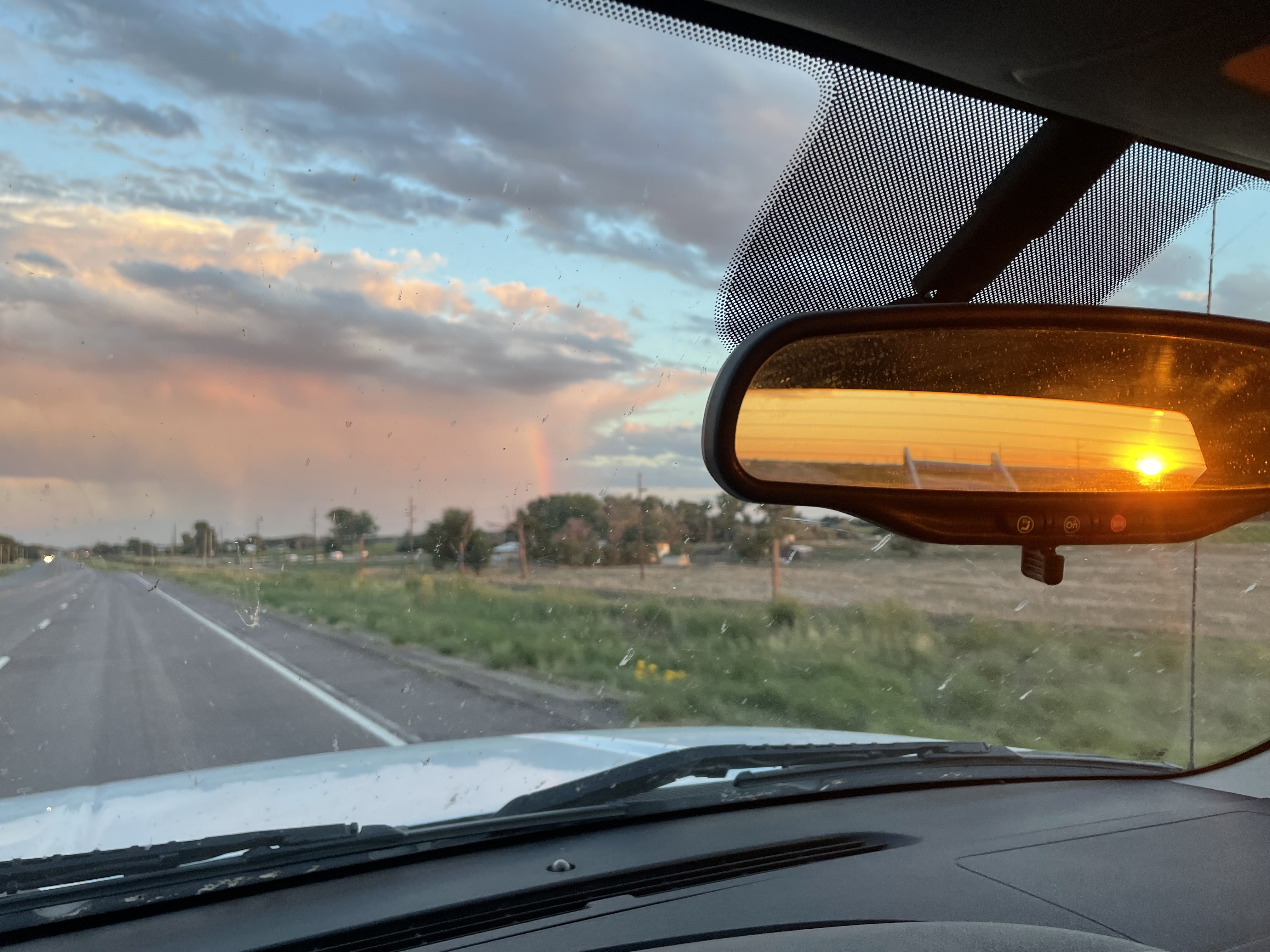
Höhenwanderweg, or the High Road
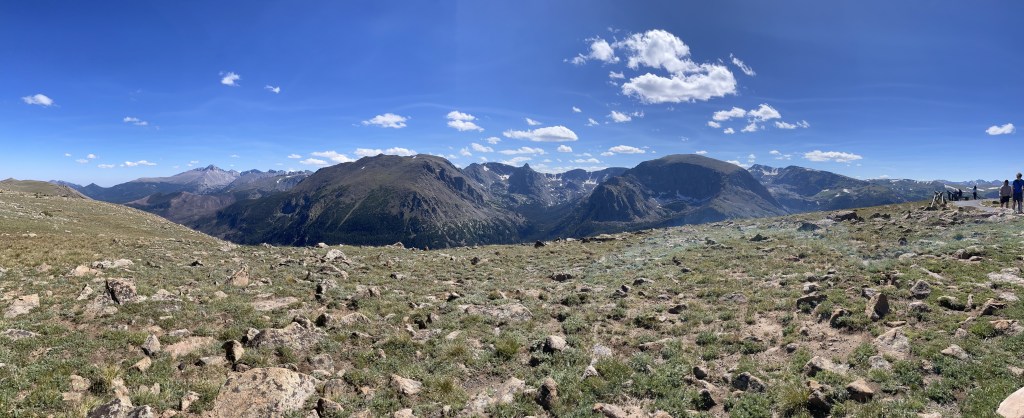
Victor struggles up the trail in the Alps. These are not the low hills of Pannonia or Avignon. He follows the Höhenwanderweg, signaled by red and white targets painted on the rocks.
His legs creak like two old doors as his knees buckle with each step. One might be shorter than the other. One leg might be twisted and gnarled. The other might be burned and hairless. There might be a rash between them, scars from surgery or dog bites along their length. It doesn’t matter because his lungs carry him forward, two balloons of membrane unmindful of the thin air.
Marmots sound three short whistles that echo from the scree.
Beware! Beware! Beware!
Where there were black eyes and wooly ears there is now a burrow.
Victor zigzags up the trail, incrementally adding vertical meters with each bend. Chevrons of boots and dots of walking sticks mark the trail. Pale alpine flowers line the trail, even edelweiss.
The cold wind is blowing against his chest. His kerchief is soaked with a stinky wetness.
His back is hot and sweaty against the rucksack. His heel is blistered and hurting, but up he goes, past dirty snow and sliding rock, one side of the trail dipping sharply.
Any rock kicked loose is a danger to those below. And any misstep is an invitation to a tumble over the cliffs and a certain end.
Victor hugs the side of the mountain, patient, biding his time.
“Elizabeth?” he cries, the wind wiping the words from his lips. “Bill?”
She does not come — perhaps wearing a straw hat and an aqua rucksack, with her hands on her waist and a worried expression on her face, not daring to look down.
“Keep your head up! Look at the trail in front of you!” he calls to the apparition.
No one is there except the bobbing heads of the flowers.
A new vista greets him when he crosses the saddle of the pass, but the clouds are gaining an ominous aspect, congealing around the horns of rock like blood. The wind here is cold, like the end of a switch.
He wipes his chapped, scarred face and descends.
He slides over the rocks, riding the dry rapids of the mountain’s face, moves diagonally towards a distant point where a group of hikers enjoy a thermos of tea.
They have moved on before he gets there, for surely they too appreciate the solitude.
A crucifix has been erected at the vantage point. The wood is carved with a command: “Enjoy God and Nature.”
Victor shrugs.
Who else is here on the mountain, tacked to a bit of wood and painted with nail polish?
He unwraps a lump of fruitcake from wax paper and studies the clouds. He automatically cuts an extra slice but no one accepts it.
The purple billowing curtains seem to draw around the mountains. The Maker is sealed in.
He spits out an overlooked walnut shell, tips back his flask and rejoins the trail.
Victor walks comfortably as he flanks the high alpine meadow lining the old glacial bowl. Some white rocks, sheep, rest high on the mountain face. A mammoth could be napping behind one of the large boulders that have tumbled into the pasture, a surreal wasteland of giant stones and tufts of grass. A brook runs with cold water over sparkling rocks. He dips in his hands and drinks, tastes the raw energy of the melted tears of snow that were the mountain’s sadness only moments ago.
He reaches a tiny hut with a stovepipe chimney. Some boots are stored under the eaves and a padlock holds the door.
Victor pulls on his rain gear and licks his sores as the clouds advance upward to greet him. He lights a shaggy cigarette and hunkers on an outcrop. The cigarette sizzles like a fingernail.
A shepherd approaches in the distance as the clouds roll up the valley. He emits the oily lanolin smell of sheep, offers no words of salutation. The man materializes through the aquatic blanket of approaching fog and rain. He looks worried.
Who has been slinging rocks at the sheep?
What predator has dismembered a lamb and eaten only the organs?
Why does he find a man, alone, squatting on a tuft of grass and puffing on a smoke, his head beaded with acrid perspiration, when he clearly spotted a man and woman on the pass earlier?
Is that sweat guilt?
“You should leave the Höhenwanderweg. The weather isn’t safe,” the shepherd says, pointing to the clouds at his fingertips, signaling the way down.
Victor nods, registers the oblique warning. The water beads off his plastic layer; tart sweat collects inside.
The shepherd glares, then moves on, his odor sweet, like milk curd and whey.
He unlocks the hut, then stands on the little porch, his arms crossed, guardedly questioning the figure crouched before him.
Did this stranger have an argument with his beloved? Was she afraid of heights, trembling and panting and refusing to go on? Did she challenge him to push her down the mountain when he confronted her? Did he? Or did he hold onto her pack’s shoulder straps and gently lower her to the earth for a last kiss before she perished?
Is that why everything is dead and silent?
Is that why there are no more footsteps?
Can things happen here in the Alps over which he has no control, much less a memory?
Certainly, no rules or laws exist on the mountain, and the many seasons that can come and go in a day are the only suggestion of time.
Victor hails the shepherd again.
He smiles his widest smile, his head between his knees. He’d like to confirm his position on his map, but the man just points at the switchbacks that cut into the valley and end at a gravel road, faint like the trail of a slug.
“Should I go on?” he implores.
The shepherd shrugs.
The man won’t listen, judging from his grip on the map.
Victor reconnoiters. The next refuge can’t be more than an hour away. A warm, well-provisioned lair is the incentive to stay on top.
It’s summer and surely the storm cannot be that deadly when the foothills ripen with apples, grapes and hay. So what if far below the maelstrom has collapsed the tents of the waltz festival, sent the tourists under the arcades of a medieval town and wet the musicians in lederhosen and lace.
Sheets of blue water begin to fall and the red targets marking the path become invisible.
He drifts from marker to marker over the vivid green grass. The trail is faint, stitched with the crisscrossing paths of cattle. No bells tinkle anywhere, but a surplus of mushrooms sprout from the dung. Victor scoops up the little pale brown fellows, confirms that they are indeed the funny ones that might convince him to shed his rucksack and dance in the rain like a pixie, drumming on his chest and calling out to the peaks to show him the way, if he would dare to eat the gatekeepers guarding the moat of perception.
No answer — just the mist swirling around him and the slight patter of drops as he rustles in his olive skins, vainly looking for the blinking red targets of the Höhenwanderweg, a cairn or clumps of lichen that might indicate the path.
The fog is accented with otherworldly chiming music.
The refrain is perfumed, almost recognizable.
“Let’s keep together!”
Is that Elizabeth beckoning?
Or a cascade tumbling through a chute?
The compass twitches nervously at the rocks: the mountains are magnetic. The binoculars are of little use. His boots are swamped with rain.
Victor rummages for his emergency whistle. The shrill toot is swallowed by the rain.
He consults his dripping map, shreds of red and green ink peeling off its surface. He bumbles from rock to rock, blindly, as the clouds fulfill their prophecy.
Maybe he should squat down on his chakra and meditate? Or keep picking forward?
The clouds gather and change colors, shifting from purple to indigo, pink to yellow.
They snap at his legs and pinch his arms. They engulf him in a membrane of water, binding with him, pulling his boots, legs and then his very body from the ground. Like a monster, the clouds lift Victor from the Höhenwanderweg into the dense sky over the divide between Austria, Italy and Switzerland.
The temperature drops. Joy billows in his soul. His breath shortens. Responsibility and guilt fall away.
He swings from the chords of a translucent sail, loftily carving the cold thermals with the dexterity of a bird.
He’s not going to make the same mistake as Icarus and reach for the sun. Instead, he looks for the way down, not without enjoying his communion, flying without wings.
Why shackle himself to the via ferrata that lead across the Alps when he’s warming up to this unexpected, exhilarating experience like to a good bottle of malt?
He drifts in the white, gray nothingness, momentarily defined by an outcrop or a morass, cradled by the fog billowing around the feet of his cloudy throne.
The eerie voice mews, “Let’s keep together.”
The cumulus strafes Victor with rain.
He fears judgment.
Abracadabra isn’t going to release him.
The clouds are solemn and quiet, free of the transmissions of the Voice of Austria and Vatican Radio. Yet somewhere he hears the dull throbbing of jet engines and the screech of terns and senses the strange morning glow of pack ice.
Victor yellows.
Has he been bounced to Greenland or worse, Canada?
The altitude and dearth of oxygen make Victor combative as he resorts to swatting at the condensation. His heart and lungs strain with starving blood.
Or is that Lake Geneva below?
Is that the fruitcake that he has hacked up?
Victor kneels on the miracle.
Earth?
The blurry red marker indicates that he’s on trail seventeen. His ears leak wax and blood, his eyes tear and he swallows.
Victor pats, strokes then beats the ground, supremely happy.
He dislodges his soaked rucksack from his shoulders and opens the fabric hump. The contents are fine, wrapped in miscellaneous plastic bags: Lidl, Kaiser, Migros. Victor finds no wings, but grubs for the flask of schnapps.
Hitchhiking on clouds has made him thirsty.
Victor rolls on his back. He has landed indeed. Even the clouds are clearing to a degree and he recognizes the shepherd’s hut graced with a column of smoke. His worries turn into smiles and he laughs, the panic replaced with hysterical relief that he has not landed in the Watkins or the Rockies but rather in a pool of mud and grass in the Alps.
His skin is dirty, doused with the pollution that litters the sky. He’s wrapped in hair and shreds of Der Zeitung and La Correra like a clogged drain. His pockets are filled with a ballast of old European coins: lira, schillings and francs.
Apparently he isn’t good enough to go much higher; anchored by guilt, pulled back by some force, maybe of his own making.
He studies his face on the bottom of his metal cup: it’s covered with red kisses. Angels, Victor concludes. Bad ones or good ones, he doesn’t really care. It’s nice to be blessed.
The light is fading and night pushes down the valley.
He coils down, following the seventeens. The visibility improves and the path is easy — well-worn switchbacks leading past the foundations of a few collapsed mountain huts. Above, the opaque peaks whisper with water.
“Let’s keep together!”
Night is falling, the chill works into his spine, and the rain returns.
Piney smoke seems to indicate a dwelling, and soon Victor comes to a smelly barn and a low-slung house.
Nothing else twinkles anywhere in the valley on this inclement night.
He knocks, enters the fiery kitchen that smells of wood and milk.
A red-faced farmer, his wife and two daughters morosely pick at a lump of Speck.
“Good evening, fine sir,” Victor says. “Can you assist a traveler on this lonely night with a room?”
The farmer grunts a yes.
Victor sheds his gear and unpacks his waterproofed supplies. To be polite, he asks for a cup of yoghurt, then offers his schnapps.
The farmer wraps his mouth, marked by an open herpes sore, around the flask. He soon brings slices of black radish soaked in salt and wine and Victor merrily adds this to his sandwich. The farmer cuddles his daughters in a dark, possessive way and they too have open teenage sores on their lips.
A cow relentlessly lows for her calf stowed in the barn.
The farmer points to the bench where Victor sits.
That’s the bed.
The flask travels from mouth to mouth once more.
Victor settles for the sound of the fire rather than explain that he has been flying without wings.
He studies a patched chink in the wall, seemingly filled by a wild eye learning speech.
Only after the farmer locks the kitchen door does he feel compelled to look at the stars.
But the sole option is sleep, and that isn’t so easy. The tiles on the floor are cold. The pine bench is rough, but its top opens to reveal a cache of blankets. His thermals aren’t substantial enough to keep him warm. Neither is the dim fire.
On a jumble of blankets spread on the floor, Victor’s mind moves with clouds; he cannot simply delete his sky helmet. He twitches and jumps as if defenestrated. He screeches, hits his noggin on the low beams of the kitchen and swears. Next to the chunk of cooling iron stove he gives his rucksack and pillow a kiss and shuts his eggs once again.
The passage opens before him, graffitied with graphics that read:
“Let’s keep together.”
He’s ready for whoever wants him: bride, monster or Maker?
He travels through his eye’s surface into his brain. The psychedelic patterns of his nerves are striated like clouds.
Victor’s first step peels from the floor.
Tonight in his mind the weather is clear and the sky is scratched with cirrus. But this isn’t a matter of a good weather report. No, this is something else, though Victor has trouble identifying exactly what.
Has he swallowed an asp and been suspended by his feet over a stew of boiled stork as a remedy? Has a scorpion crawled in his ear as he dozed under a Tuscan cypress and hot oil been poured over his head by a peasant as old as paper? Has a tapeworm crawled out the aperture of his mouth due to a week-long fast? Has he visited a psychotropic shop in Vienna or Zurich and purchased funky plants? Or is this more likely a part of the dreamscape that seven billion people experience on a nightly basis, when their eggs flutter like birds?
Victor levitates above the cold coals of the stove. He’s probing for an exit, for there is much walking to accomplish tonight. He bumps against the windows. He tests out the sooty stovepipe, almost slips through the greasy keyhole of the kitchen door, but then squeezes through the chink in the wall out into the cool night.
The grass is frosted with hoar. The clouds circulate around the fur-embroidered backs of the peaks, gathered together like wild boar.
A security floodlight in the barnyard ticks on, and he quickly moves past the sticky breath of cattle. He must be back before the farmer’s family wakes to milk the cows, brushes the blood from their sore-laden lips and finds Victor not there.
He hovers outside the farmhouse far too long.
Victor catches the silhouette of the farmer. Like a troll, the farmer slips under one bed, then another, a stone falling from the mountains, unable to stop, since God has blessed him with a surfeit of women and a place without taboo, where even the dead can be given life.
Victor could be the eponymous hero, there to spare the girls from incest. Or he could be the villain, waiting for his turn. Either way, he’s ambivalent, anchored by his own guilt and goodness when the farmer spills into the farmyard.
The farmer is enraged, standing in his nightshirt, his penis poking at its fabric, clutching his shotgun, rubbing his herpes sore, shouting obscenities. The farmer points at the floating, flying man before his finger touches the trigger.
Victor’s entrails spray through his back and he collapses in an acrid heap of manure where surely he will be buried. But even mortally wounded, Victor rises, as if he always had been dead, as if there was some confusion about his living or dying, about his very supernaturalism as both scientist and creature.
“Let’s keep together,” whispers the voice, physical, warm and close, lifting him from the stink, carrying him into the sky as if they have always been together, nothing less.
He’s neither flapping nor peddling, neither riding a broomstick nor sitting on a carpet. He’s no Exupéry or Earhart, but Victor walks the sky trails with extraterrestrial effortlessness.
His gait is steady, his knapsack loaded with supplies, especially yoghurt and ham for his sky picnic. He follows the Höhenwanderweg, moving along the peaks, in contact neither with the trail nor the mountain.
He wraps a long silk scarf around his neck. He slides a brown tam onto his head and tightens the sky helmet. His fingers intersect with gloves. He fastens an oxygen mask around his chapped face. The crampons are easy to buckle to his boots. He fastens carabineers to the clouds. His multicolored ropes dangle downward and he pulls upward, grunting at the sky, moving through the cloudscape — a granite boulder field, a glacier glowing with starlight, spires of soft unctuous rock, a pass marked with bison bones, a gorge running with cold blue water, a dry hard desert spiked with blue cactus and terraced with indica, black volcanic slopes drenched in ferns and populated by a people who cannot count to a number any greater than many.
He struggles with the sky. Like Icarus, he wants to go higher after all.
The sky is not the pale blue of dawn, not the pale opal of rain, not the pale jade of a funnel cloud, not the pale pink of hail, not the pale ruby of a hurricane. The sky is the pale black of night.
The red and white targets of the Höhenwanderweg lead him everywhere at once, ungraspable and unknowable, as if his body was breaking into its component parts, dispersing and diffusing his atoms into the atmosphere.
Victor admits flying without wings might be chemical, when the equilibrium of life comes to rest, but he certainly doesn’t feel death. Maybe it’s simpler: too many codeine paracetamols, wheat beers and shag cigarettes, too many vices that add up to a sensation of flight.
Spooning in mouthful after mouthful of cloud yogurt, wet, warm and fizzy, Victor can only speculate that the mountains will take his life like they take the rain that falls from the sky.
He could collapse into a glacier, a bullet having passed through his gut, and no one would know the culprit.
The farmer?
The shepherd?
Elizabeth?
The monster?
Victor might be unearthed five thousand years later, not overly decayed, and scientists would open his belly, find the fruitcake and not notice that he was someone’s victim.
They would never know he had flown without wings or that he too had interred at least one victim in the rose rocks of the Alps.
The scientists would find a pocketknife from Solingen in his bag. They would find that he had insulated his boots with grass. They might subject Victor’s body to x-rays and only then begin to suspect, but without ever comprehending the feeling of Victor’s great flight over the Höhenwanderweg.
Note
“Höhenwanderweg” was first published in issue 1 of Bordercrossing Berlin (2006). Sadly this magazine ceased publication after three issues.
Poppy and Gaston
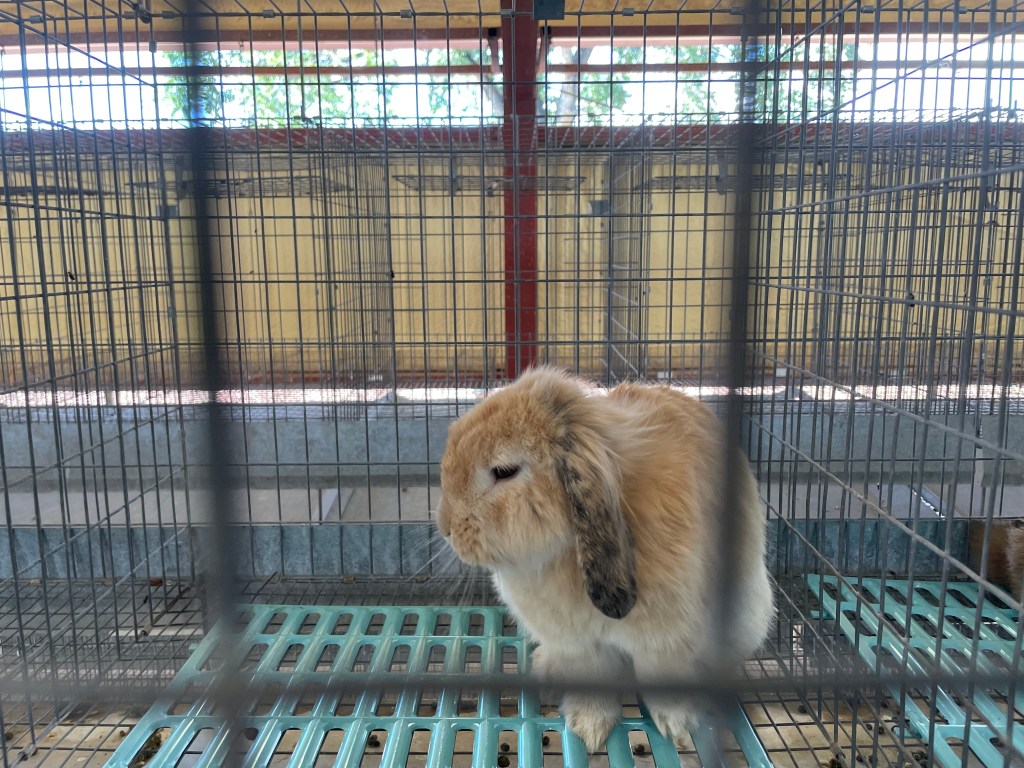
Poppy was filthy and Gaston was famished.
“Gaston?” Poppy asked.
She bumped around the messy, cold-water flat. Her accordion, Scandalli, was on the black parquet
Her arms tingled. She had rehearsed with a reckless verve that had poured from her body through her instrument. Piazzola’s compositions brimmed with provocation, stabbing at the soul in a whirl of love and hate and she understood him. Now the emotion was fading from the hours spent skipping between tangos in some jazz-like high. Astor knew what it was to be. O, how she adored the Argentine blues. The fucked up everything.
“Gaston?” She stopped the metronome on top of the dusty amplifier that issued a soaring song from her homeland. “Mon père?”
Gaston was gnawing on her flip-flops in the shower, mounted like an afterthought in a kitchenette that was hardly functional due to the leftovers and plates. If not a genius, Poppy certainly was a slob.
“Silly,” she cooed, rescuing her footwear from her enormous black rabbit. “I’ll bring us something proper to eat later.”
Gaston nodded sagely, wiggled his wet nose. The divine footy taste of Poppy’s slippers had sparked his appetite and the musical command of her voice could not quell the yen to eat.
Cables. Underwear. Matches. Soap.
She tucked her swimming cap alongside the cosmetics for her trip to the public baths. The toes of her socks were decorated with ruby sequins. “Too thin! Too gray!” she exclaimed to the haphazard linens, as depressing as the concrete sky, as she sorted out a towel.
Poppy was marooned in Budapest, Oz of the Hungarians. There was no question of going home to Yerevan. She refused to return unless laden with prizes, riches or both. Anyway, who needed family when there was music? But she couldn’t live on tunes alone.
The fridge was ajar and defunct, the kettle long expired, mildew had crept up the walls and the newspaper insulating them was a fire hazard. The hotplate and a warm brick in bed were her sole warmth.
The heap of biking accessories on the table was the last impediment: lights, reflective strips, helmet, leggings, gloves and a cherished cap knit by her mother. Unlike other care packages, the hat had arrived, somehow judged unworthy by Hungary’s nosey postal service that retained a communist habit of censoring packages.
Hungarians were thieves. Last in the door and first out.
Poppy stepped into her sealskin boots. “Mon père,” she said, summing up the mess, “Do tidy up.” Her voice was imbued with the special love she reserved for Gaston.
He snarled at her from behind a speaker pulsating with the breathy register of the duduk.
“Isn’t it horrible, living with a woman who’s never satisfied?” she said.
Gaston tipped his ears, one of them almost human in shape. He hopped from his refuge, passed the islands of Poppy’s laundry.
Poppy skipped back a step, a tad in apprehension. “See the holes, Gaston? Rats. That’s where they come from and that’s why you’re here: to stop them.”
Dare he tell? Rats were his friends.
He nodded with sly purpose. The accordion’s bellows smelled wonderful. And the bony keys smelled scrumptious too, far better than the pong of traffic stalled on the overpass outside.
She spoiled her Toto with caresses. She brushed him with her fin-like nose that divided her inexplicably beautiful face. Gaston could imagine burrowing somewhere between the large glossy eyes of his sweet mistress.
“Well, Gaston, I’m off. Bon chance.”
Swallowing a last sip of ginger tea and vodka in the kitchen, she toasted herself with a deep cry of anush. Then she took a spoonful of leftover salty bone soup, an Armenian recipe for lean times.
Once on the landing she said, “Got my chicken,” and tapped her knapsack studded with white quills. She marched down the curl of stairs to her bike. She hated how it telescoped so wildly, she its buckaroo, but it was the best way.
Neither heeding nor yielding, Poppy careened along the service road at top speed through the blur of traffic. Just one more anarchic obstacle in the rush hour. Artfully threatening aberrant motorists with shakes of her fist, her middle finger raised in her gloves, spitting when necessary, blowing her nose with her thumb, her lights blinking furiously, she was a danger to everyone, most of all herself.
Steam billowed into the sky from the bathing complex.
Poppy fishtailed to a halt over a sheet of ice. She secured her bike in front of the circus pavilion opposite, where once she’d cried on a bittersweet Christmas day, overwhelmed with laughter and despair. She barged through the swinging doors into the bright, yellow foyer and paid at the kiosk.
Descending into the locker room with its peculiar smell of feet, towels, sweat and antiperspirants, Poppy was half-undressed already. Time was a premium.
That’s when she noticed: she had no slippers, no flip-flops, no plimsoles or moccasins, nothing to wear against the strange wet surfaces of the baths.
“Gaston! You thief!” she cried in a blood-curdling yell, huffing her hands onto her hips in annoyance.
She rushed her clothes into a locker and wiggled into her costume while ignoring the muffs and pits of the others. Snapping the elastic material over her shoulders, she was a portrait of modesty. Top-heavy like a wrestler, her back laced with muscles from playing her Ark-like squeezebox, her chest as sharp and sacred as Mount Ararat. Poppy walked along the corridor, hovered for a quick pee in the ladies, then picked her way along the salted path outside.
How she rued the absence of her slippers!
Accoutrements tucked under her arm, she clenched her hands to her stomach as she dashed to the grand hot pool, the water slick and green with minerals. No one, not even her, liked to think about just how many people shared the water..
Grunting upon contact, she smiled.
Old men circled, bumping her under the pretext of the poor visibility. Poppy returned these unwanted touches with looks of disdain. Her eyes deadened with a warlike look. She had no illusions about these reptiles decorated with mustaches and gold—Turks!
The heat penetrated her bones; they warmed and spoke. The Armenians would resist. Always.
Poppy dunked her statuesque body to the tips of her jet hair. Red people popped out from the sauna like demons, steam rising from their heads, some sliding into the mounds of shoveled snow, slippers slapping against the flagstones as they discarded them at the pool’s edge. She looked on the well shod with envy. Then it occurred to her.
She stepped from the water into a pair of blue slippers. Chinese Puma knockoffs. Gritty and slimy at the same time.
A porthole led into the labyrinth of the main building. Daintily she circumvented an octagonal tub of sulfur water, passed into a larger room containing a cadmium-colored lap pool whirling with a circular current and crossed into a corridor that ended with an acrylic door. She entered into a mist-filled chamber, the wet sauna, with stone pews and a nostrum of silence. The chamber was like a strange crypt dedicated to pleasure and enlivenment.
If every day could be like this, she thought, the world would be filled with performance, dance, music and sport, not war! Poppy tried to be fair, staring into the hissing void, alternately flicking off the sweat or stretching in yoga-like poses. She rued that people had latched onto one single pecuniary idea of richness. Had they forgotten that richness was about depth, intensity and breadth? It was a great leveler, a thousand bathers reduced to their nakedness and sweat. Everyone was equal. That’s what she liked.
Poppy laughed as she stared at the Chinese Pumas, her shoulders rising and falling over her spine. It was an indiscretion, borrowing really, at least that’s how she justified it. She would deposit them and take someone else’s.
How she loved mischief!
She sought out the circulating pool and ditched the counterfeits at its rim. Poppy backstroked against the current and rinsed away the perspiration and music.
Later, Poppy picked up a pair of red plastic pumps. She guessed the owner to be the old toad dozing on a jet of water. Feeling wonderfully sneaky, she skied into the next wing to the other steam cabinet, the hot one.
It took her breath away, tangy like a giant butt-hole, which it was; the people plunked down on their haunches on the old greasy boards. She stood and didn’t make eye contact with the tattooed boys. It was a tight fit and she was here to be, only to be. She massaged her hands, adepts capable of spanning two or more octaves without trouble, adroit even in the dark, capable of chords of twelfths and fourteenths. No one else could do that.
It’s hot.
I’m hot.
Berlin’s hot.
Poppy’s hot.
Paris’s hot.
Tango’s hot.
Poppy’s hot.
Piazolla.
Reinhart.
So, so hot.
Almost a tune, she thought, filled with pedigree. New streams of virtuosity glided through her. Tango rhythms danced in her head. She was ready for tomorrow’s rehearsal, could even start tonight, neighbors be damned.
She wrinkled her schnozz.
O, she needed air!
The ritual continued: soak, steam, soak, harsh rubs with slivers of ice, dry sauna, cold plunge, showers, water massage. Her energy evened to a liquid purr of oneness.
A burble of international languages burbled through the premises, as odd and varied as the slippers scattered around the grounds. So mixed together were the babble of words that it was if the slippers were talking around the edges of the pool too, burping and stuttering in their secret slipper language of abandonment, exchanging glances with her, urging Poppy to cast them away.
“Where are my papucs?” echoed a voice, likely one of her Hungarian victims.
How grand, she thought, captivated by the idea of such universal and practical footwear—papucs, slipper, mule, sandal—common to each and every language and culture where they had feet.
The word was free to transport the world!
Poppy chuckled oddly, in great hiccups: God, she was a mad bitch, just like her mother, who would belt out Soviet chansons from her bandaleon, over the roofs of the housing estate before the earthquake, once upon a time when false was true and true was false. It was whatever they believed.
Undeniably, slippers were magic and Poppy was positive that slippers were as universal as music. She felt such an overpowering sense of solidarity with slippers, sausages of plastic, grass, leather, rubber or bamboo, nearly the shapes of strange blended musical notes, that she almost began hugging the bathers in the pool outside, even the old Turks playing chess in the now falling snow.
Utterly high on the slipper concept, she hazarded incorporating the slipper in her act. She dwelled on this powerful idea of a slipper tango and waded to the forceful spouts at the pool’s center and massaged her muscles against the flesh-tearing jets, the final step. It was about as much calmness and relaxation she could take.
Poppy rushed through the end of the routine. She showered with two bars of soap: one olive, one eucalyptus. An old, plump dyke feasted on her from another stall and played with herself.
“Gross old cunt!” Poppy cursed. “I’m for Astor!”
Perfectly naked, she stood under the dryers in the corridor, alternately toweling and blowing, then applying her tiptop blackthorn oil.
She checked the time.
Five minutes left or no deposit back.
Poppy hauled on her knickers and leggings in one movement. She jammed on her socks. She pulled on her shirt, relieved not to be cosseted by the bra that was mandatory when playing the pinching bellows. Yes, she missed Scandalli. Was there ever any doubt?
She tossed her wet costume and towel into her chicken and zipped up her sealskin boots.
Damn! Was she the one who adopted the orphan slippers under the bench?
No, not at all; they were someone else’s.
It was inconvenient and Poppy hummed the castaways toward the main pool before gliding through the turnstile.
Poppy presented her card and the machine spat out her partial refund.
“Voila!” she gasped in the foyer where she sat, organized her bag, peeled and ate four tangerines, felt her pores close, then reopen in a sweat. She decamped to the canteen and ordered tea.
The server looked at her quizzically when Poppy returned to the counter.
“Dear madam, any scraps for Gaston, my rabbit?”
Rude and unwilling to work, much less do any kind of favor, the server ignored the request.
Poppy modified her request. “For my bunny?
The server grimaced. Maybe the girl wanted batteries?
Poppy laughed. Hungarians! So not hot! Gaston was far more courteous than these Hungarian animals that claimed a country.
With her boon companion in mind, Poppy left the public baths. Every part of her was easier, lighter. She gave her spare coins to the crone begging outside. Who needed food?
Poppy soon joined the traffic and turned under the railroad tracks for home, her lights blinking like benign green and red fairies.
“It’s me. I’m home,” she called when she pushed open the flimsy door.
She tossed her chicken down. Where were those slippers?
Poppy froze.
Scandalli was in pieces!
“Gaston, out at once!” Her nose wrinkled. No din-dins tonight.
She approached the machine with trepidation. Everything had gone into winning it. Her virginity no less!
Poppy stamped her foot in rage.
The keyboard was gnawed, some keys smothered with what looked like jam, the bellows mangled, leather and reeds everywhere, sharps and flats scrambled on the floor.
“Rats got you or what?” she said to Gaston, black and bloated like a sun-ripened bull under the stereo. She dug a boot into his belly. He was stiff and punctured with Scandalli’s keys and wires.
“Had my slippers for dessert?” What had possessed him? He’d never devoured her instruments before. “Mon père?”
Nothing.
She heaved him up by the paws.
“A last tango?” she asked as Piazolla ripped through the stereo. She whispered in his human-like ear, lifted his chin and planted a kiss with all the magic and soul of her Caucasian heart.
No spark erupted in Gaston’s pale eyes; he was no prince. No, he was Poppy’s most loyal friend; clean, accommodating, never judgmental.
“Live through the music, not on it,” she said.
Astor vaulted from the speakers and the couple danced to the brooding tune. Poppy and Gaston made jagged cuts of lefts and rights, whirled in the music that spoke of jealousy, gauchos, betrayal and knives. What smithereens of Scandalli left were trampled. With Gaston rigid like a doll, a devilish mood overtook Poppy’s sense of instrument rescue.
“I’m going to find out who did this, Gaston,” she said, “But I will eat you.”
Without sympathy or emotion, Poppy clipped off his paws and peeled him in one quick motion. She dressed her friend neatly and retrieved the pieces of Scandalli from his innards as well as her gooey undigested flip-flops. The saddle and head went into her ongoing bone and salt soup. She sautéed the legs with rosemary, almonds and dried figs. Gaston was a delicacy.
For several days, well fed on Gaston, refraining from alcohol in respect to his soul, Poppy did investigate the mystery: why and how had Gaston attacked her accordion and slippers? She baited the rats and interviewed them about the crime scene. She interrogated the pigeons on the overpass about what they had seen. She quizzed her neighbors and posted flyers in the neighborhood obscured by smog. While she waited for answers, with forensic zeal, she reassembled what she could of Scandalli, struggling with the wires, reeds and particularly the base keys, before escorting the beast by taxi to the accordion repair.
The repairman yelped at the sight, but Poppy explained what had happened. She was nonchalant, but in her heart it was as if Gaston had eaten her.
She was unnecessarily cruel when she explained, “Sir, in Armenia, we keep them in hutches and stake a dog against bears. Rabbits are for us to eat and are easier to handle than birds. He must have known.”
“And, I likewise, know what to do,” assured the repairman.
As her machine was being recombined from blasphemous bits of Hohners and Wertmeisters, for she had no money for Scandalli parts, Poppy deliberated.
Gaston’s pelt was preserved with salt and slowly drying over the hotplate. She needed an end and it was a practical decision: her slippers were a write-off, and her ruby-sequined socks were ineffective against the draft welling through the floor. The idea landed with one eureka-like punch.
Slippers, of course! Gaston would live on..
Later, enjoying the warmth of her new papucs, happy to be playing again with her rebuilt machine, she did what, till now, she had avoided: she cleaned Gaston’s cage. It still brimmed with his friendly presence and Poppy saved a few dried pellets. She stored the sweet mementos in a fragrant box, she was not without remorse; how could she have known the extent of his appetite?
Wearing Gaston on her toes, Poppy was ecstatic. She feverishly composed a new bunny tango. Gaston was the beat, a strange fused black note that hung in the huge span of Poppy’s hands.
“See, Gaston, slippers, are a great language.” Poppy bent down and patted her feet. “My father, rest in peace.”
Note
“Poppy and Gaston”was published in Versal No. 6 in Amsterdam in May 2008 by the Words in Here Collective. Poppy is based on the Armenian accordion maestro David Yengibarjan.
Nature’s Arena
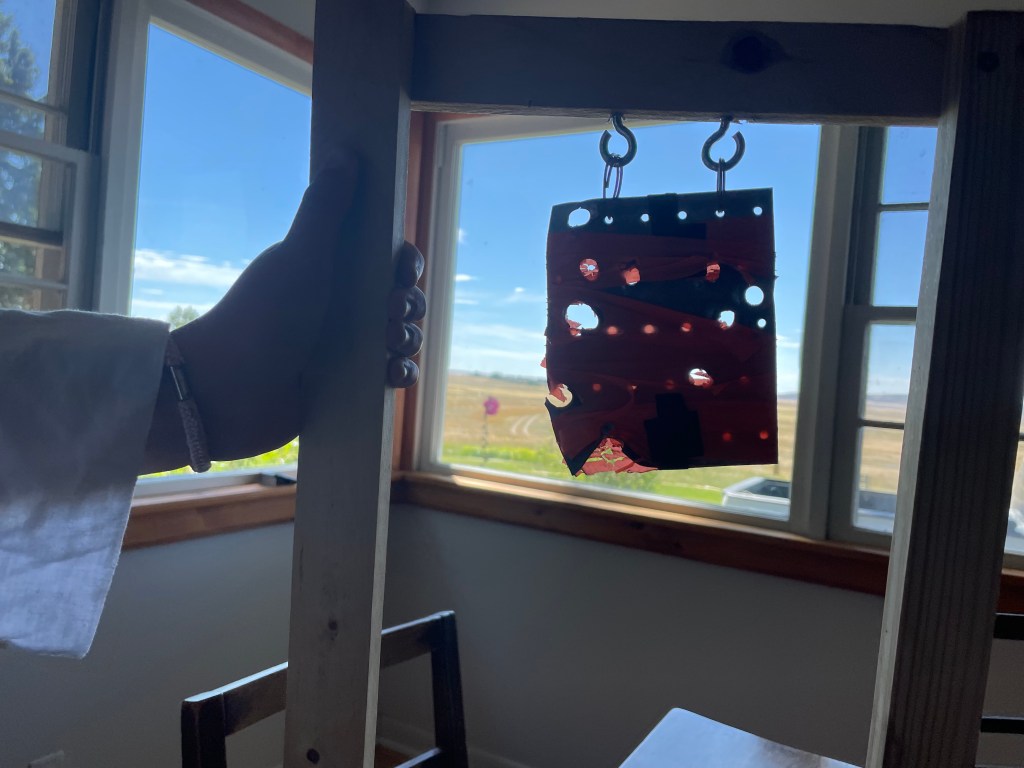
The cottonwoods are moving with wind along Rawhide Creek, where the grass is chest high and the water is stagnant. Beyond the swings and slide and over the footbridge there’s a small cemetery. The bones are inevitably washed away when there is a flood.
Smudge curls his toes on the porch, some minerals encrusted around its edge; the boy’s ready to pull on his ropers. Hunks of white quartz sparkle in the sun, here and there the crystals stained with algae. A slab of amethyst is propped in one corner.
Father sucks a cheroot through his brown teeth while he disassembles an old rifle. He attends to the inside, oiling; it has a tendency to jam at important moments. He’s already cleaned the barrel with a long rod tipped with a fuzzy brush.
Smudge’s toes want to leap into their boots but he has to tell them no.
Father asks him to slip the hollow-tipped shells into the magazine in a low tone signaling that guns should be revered.
“They’re good enough to kill a gopher… even a man if you hit him in the right place.”
Smudge’s fingers load in the cold brass bullets, not without a few falling onto the brown Astroturf of the porch. He recovers the slippery devils and locks the magazine and they’re ready to go. Father moves through the hissing aluminum screen door to return the kit to the closet where the gold shag carpet extends. Flies are buzzing against the door, bashing their eyes against the steel mesh, inside and out. Hissssss, it cries again.
Father gathers the Remington in the crook of his arm, walks to the Chevy, its bonnet sticky from the elms’ sap. He looks in the bed and tightens the top of the yellow plastic water jug. He scoots into the cab and places the gun barrel down next to his thigh. Smudge is already there, sitting on the peanut bars and apples.
“Your boots, kid,” he reminds him, and it’s true — the ropers on the porch like a couple of dead rabbits. Smudge fetches them, the key turns and the truck grunts a complaint. It reverses into the gravel road, scratches a turn, then engages, gravel pinging.
The pick-up moves along the south side of the single block that defines Jay Em — the decrepit lumber yard where bats dwell, the boarded up windows and peeling paint of the general store guarded by two rusty white Standard Oil pumps, the subsiding premises of the bank, some quarters behind its single plate glass window held together by tape. The truck veers past a mansion obscured behind a tangle of trees, the singing domain of wild turkeys, morels and does.
The vehicle thunders over the bridge. A cloud of dust mushrooms behind as it bends around the big corner that leads into the brown prairie. His arm hangs out the window. They pass the first abandoned homestead, tin roof peeled apart by the wind, clumps of wire around the perimeter and a knot of iris that has somehow survived without any human care.
Father fires up another cigarette. The tobacco wind circulates right under Smudge’s nose. He figures they’re not stopping at the dump to shoot bottles. He hasn’t asked what the quarry is to be. Maybe nothing. The truck rises over the first big hill. Jay Em disappears from view. Ahead is grass, cattle, cactus, fences, hills and the road.
“See the pronghorns,” says father indicating the herd with his cigarette. He is naturally the first to spot anything. Anything that moves on the blanket of grassy sea betrays its presence. The pronghorns are not worried about a passing truck. It’s when the truck halts that the antelope will sprint away under the high cirrus clouds and raw blue sky. The hills dip, rise, undulate, the road flanked by barbed wire and old cedar fence posts screwed up by the wind.
“You wanna look for some horny toads?” he asks when the truck passes a gully.
“Nah, dad, last time I just found rattlers with Gramma.”
“Horny toads don’t bite, kid. But they might pee on ya’.” He chuckles half a breath.
“I don’t want no toads. All there is out there is snakes.”
Father laughs a touch. “Well, we gonna hunt birds or critters?”
“How ‘bout both?”
“Don’t be greedy, kid. And ain’t the right cover for pheasant out here.” Indeed there are no rows of corn, marsh or sorghum that might be a rooster’s idyll.
“How about twittlins? — I mean… doves?” he queries.
Father furrows his brow — twittlins?
“Speak up, kid! I saw a whole flock of what you call twittlins not a few hundred yards back. But it ain’t really the season and we don’t have a permit.”
“We could shoot them off the fences if we aim right. Oh please!”
“That’s a mean trick, boy, but I kinda get the idea that we could have ourselves some pigeon pie.
They’ll’ve migrated by the time it’s the season, so we might as well get those twittlins now.”
The truck is far enough from Jay Em that the shooting is not going to bother anyone, that little amount of anyone who still lives in the town. Certainly not the heifers and steers out in the prairie grouped around a windmill, saltlick or trail. The truck parks and father doesn’t bother to turn off the engine. He snugs the gun into his armpit and cradles it in his palm and aims at the hand-sized mourning doves clustered on a wire fence in neat rows, some left, swinging on the top wire, others right, perched on a post or flitting in a bundle of tumbleweeds bunched in a corner. He knows the difference between meadowlarks and killdeer and how to aim at the gray mauve birds that kindly sit on the wires. Father sights along the barrel, fills the sight with one bird, then two. His hairy finger is just so on the trigger. His thumb unlatches the safety.
Pock!
He pulls the bolt and out rings a shell. A gray feather drifts onto the road.
Smudge pushes the heavy door open and scuffs down the road to where he expects to find a macerated bird. It’s not father’s gun for nothing, for under the wire in the grass where the cattle cannot reach is a pair of decapitated doves. The hollow point has swallowed up their heads and all that remains is their white collars.
“You got two!” Smudge shouts, picking up the two birds, the warm blood trickling onto his fingers. He’s not one of those people who object to meat resembling the animal it comes from. He puts the birds in a sack in the back of the truck. “Two for one sure is a mighty good start.”
Father smiles, sucking at another cheroot, letting the truck casually roll on.
“You try, kid,” he signals and Smudge takes the gun.
His hand and eye wobbles and it seems like he has the dove in the canyon of the sights. He squeezes the trigger but there is no give.
“Try taking the safety off,” father instructs him as the doves fly further down the road and the truck ominously strolls on, the stones and pebbles sticking to its round feet.
Smudge sights up again.
Pock!
The gun recoils and the wire sings with the sound of the ricochet and the dove is still sitting there with his amigos. Father is willing to be patient. “I ain’t see no twittlin drop, son. Try again.”
Smudge squints harder and his hand is wobbling again, and this time when he pulls the trigger he finds that the dove is no longer there.
By the time father says, “Go look for it, kid,” Smudge has opened the door. He hustles down the road and locates his bird, a little worse for the wear.
“It’s still alive!” he hollers.
“Well, either wring its neck or step on its head!” father shouts in reply.
This choice makes Smudge squeamish… so he opts to step on the head. It sickeningly implodes under his boot and the deed is done. The tally — one for Smudge, two for father.
The two of them alternate now — father efficient, decapitating most of his victims, and Smudge making a mess of things, shooting out the breast, really the only edible part, or clipping a wing, the dove hobbling in the underbrush and mewing like a cat when Smudge is lucky enough to score.
In an interim of the carnage for a snack of apple and peanut bar, a snake slithers across the road.
Smudge hoots but the snake is already in the ditch. He wants to chop its head off with a shovel like he’s seen Gramma do, its tail shaking and coiling up the handle.
Father puts a stop to that idea. “It was a bull snake. They eat the rattlers and prairie dogs so they can’t be that bad.”
It’s a war of attrition: who is going to kill who?
The truck arrives at one of several plots of featureless land. Out of sight, behind the fence, beyond a draw and behind a bluff rests a homestead, every blade of grass accounted for by father’s boots of childhood. This particular fence holds his wealth according to the county cadastre. Father indicates that they’re to try their luck on the old plot of family land.
Smudge unhitches the gate. A barely visible track leads through the cropped prairie. It’s rarely used, except by the rancher who runs his cattle on the place for a fair rent and checks the windmills from time to time. The truck sways and bounces, its chassis creaking over the lumps of grass. Time seems to pause as father carefully navigates, aware of any rocks that might crack an oil pan or break an axel. In the draw, which drops into a sequence of gullies and the serpentine meandering of Muskrat Creek, they might startle a buck or a bunny, if the wind is blowing against them, carrying away their scent and sounds, but there is no burst of animal speed on this day. The truck fords the creek and grinds up the bank.
A sequence of low domes is mottled with rocks. Here, they stop.
Father already stands on a dome, expounding a glut of geological detail, for among the rocks is an abundance of samples not normally found here. Some pieces have been brought by his father — bits of agate and quartz like those around the porch in town, logs of petrified wood, more semi-precious rocks than Smudge can possibly identify.
“Some of these rocks were brought here by primitive man,” he’s saying obtusely. “It’s a great spot and vantage point for huntin’ big fauna; a man can work a flint core into a tool or weapon — an axe, a scraper, a spearhead, an arrowhead — while keepin’ an eye on giant sloth or mammoth. Water is near. There’s protection below from the wind. See those campsites, those rings of rock that’d hold down a wigwam or tepee?”
Smudge is not really paying attention to the lecture on the ages blowing from father’s mouth into the wind tinged with cigarette smoke. Instead, he’s hunting for ammunition for his catapult. The cattle collected around the creek make good targets, the projectiles stinging their haunches like flies.
“Cut it out, kid,” he insists, “I don’t want to buy a heifer if you shoot out an eye.”
Smudge desists shooting and lobs some rocks into the void of wind and prairie.
“Let’s check out my old place,” father concludes and they scramble back to the truck.
The house is indicated by a grove of dead elms and bare electricity poles, some posts, wire, a caved-in root cellar. Smudge jumps down into the sandy earth that blows around the house and steps up the crumbling cement foundation into what is left of the doorway. The kitchen is scattered with bleached tin cans, broken cobalt bottles, shingles from the roof, bits of blistered wallpaper and dung. It smells vaguely of skunks, and Smudge doesn’t stay in the house long investigating the kitchen and two rooms, long defunct and permeated with abrupt snakiness. He won’t recover an ephemeral photograph or a newspaper because paper is sweet, easy food for insects. His interest can only penetrate into the past so far; there are no artifacts to warm in his hand jammed in the denim pocket of his jeans for the moment.
Father unwires a coffee can from the mouth to an old well and he’s already got some wire weighted with a rock ready to figure out if there is any water. Rain is as rare as people in this extreme environment where in the distance of Muskrat creek are two antediluvian cottonwoods, Adam and Eve. In the bark of these two witnesses are remnants of buffalo hair and bullets, in their rings accounts of drought and blizzard and certainly no account of old school, country boy entertainment.
Here at the old homestead, father can feel himself awakening like a child again, almost like his destructive son, to the memories of the past, yet memories his son can’t possibly have, being a boy of the modern suburbs.
He sneaks along the bluff. He draws the gun to his shoulder and plugs the snapping turtle with bullets. He catches some frogs and stuffs their mouths with cherry bombs. He baits a steel trap and covers it in the reeds and rushes for a muskrat or beaver, whose pelts he will sell for pocket money. He lures crayfish out of the mud and ties them to bottle rockets and sends them into the immediate hemisphere. He fashions a spear in the household forge and plunges it into the back of a carp surfacing like a monster. He carves a hole in a fallen branch, places an irresistible stamp of metal in it and drive two nails diagonally either side of it, so a raccoon will end up his newest victim, caught by his curiosity.
Nature is a violent arena, and if he could so lucky as to find a cougar roaring in his trap, leaping into the sky as far as the chain will let him, he might loose some skin or even his life trying to kill it. The cougar will thrash and cry and moan more than a man, his paw locked in the jaws of steel. He will remind him that the country has eyes, and not necessarily friendly ones at that, before he kills him with a shot from his gun.
Like an opossum the cougar might play dead and come at him and scratch off a good part of his ear before he kills him with his Bowie knife. He also might find the trap closed and empty and he will save the bullet for another day. Or on a snowy afternoon when the light is fading he might carelessly step in the trap himself and find the jaws have dismembered much of his foot and he will hobble around the plains ever after like a coyote that has chewed off its paw. Nature does have a capacity for revenge.
Smudge is itching to resume their partnership in ornithology. The gun is in the truck and the doves are not here on the East Place. They’re on the fences. But father is adamant about snooping around for more memories of his old home. Smudge walks up one of the hills, littered with more rocks and studded with clumps of yucca, and looks down on the drab, half-toppled house and the man picking through the refuse against the expanse of nothingness. He could almost be a child.
Father hears the bleating of the sheep before sundown. He remembers the heavy stroke of the unreliable Model-T likely to splutter and fail. He smells the foam of his pony rising through his dungarees as it gallops over the hills from the schoolhouse. He smiles at the legs of his sister chasing a hen through the yard. He watches his father cut geodes in half and reveal their sparkling centers like stars. He recalls a neighbor who worries over the health of a newborn child and who will die. He marvels at the light emanating from the bulb brought by New Deal progress. He sickens at the putrid smell of offal and skin as his father dresses a buck strung by its haunches from a tree. He savors the taste of sugar in oatmeal cookies hot from the cowchip-fired stove. Father’s memories, nostalgia without the hardship of wilderness living, will not blow away in the elements; they are fixed to this place, and it takes time for him to stem the flow of the past that rises from the ground like salt.
Boy!
That’s the holler that Smudge has been waiting for. That’s his signal to tumble down the hill down to the truck and inhale the tobacco smoke.
The truck noses away, up the hill, past the samples of geologic time, fords the creek, circles past the gullies, heads towards the gate that he will squeeze open and close once more. Sure enough, the doves are there on the fences either side of the dirt road and Smudge reaches for the gun.
Father stops him with a firm brush of his hand. “Not yet,” he says.
Smudge may not understand why but he heeds father’s advice, at least until the truck has made its way around a bend to another parcel of property arranged in alternating strips of sienna soil and bronze wheat.
“We’re too close,” he says. His eyes have acknowledged another sign of life, a red and white harvester chugs across the horizon, like a mantis gathering aphids, harvesting the fingers of wheat, spitting out straw. “A toot and a wave will be enough.” The wind drawls in the corner of his mouth.
They take a fork in dirt road. Gullies interstice the hills. The grass is shorn and spangled with cactus. Smudge gets out of the cab of the pick-up coated with dust, bug juice and the blood of the doves. Apple cores, peanuts, shells and sand litter the inside. They’re near now.
Against the rose hills sits an old wooden house. This is another part of father’s desert empire.
Smudge opens a hatch in the whistling barbed wire. The wind almost lifts father’s hat off. Sand blows into his tracks. They rock through the prairie and pass the well and the pump. The house is fenced off to stop cattle from eating it. Five big cottonwoods bend over the house; their eyes nictitate brown tears. He unlatches the wooden gate and digs around in an old iron stovetop for the key in a tin box of cough drops. The door jeers open with a kick. The floor is covered with hundreds of dead moths, millers. A few mementos fill the house and they quietly sit on their shelves. Among them are chert scrapers and flint blades. The fireplace is inlaid with minerals hacked out of the hills. The crystals phosphoresce under a black light. No one lives here but what looks like new embers rest in the grate.
Father scratches his head, puzzled. There aren’t usually visitors.
Father dismisses his worries and is quick to tackle what might need attention. They go to work mowing and watering the grounds. From the corner of his eye he keeps an eye on his son.
There is nothing tangible he can identify. It is only a feeling, a suspicion that he is being watched, as if the cougars had suddenly reappeared here against these hills, their claws writing, “Lions live here.” Something walks through the house and stokes the fire. Whether those eyes are his father or, indeed, a lion, he doesn’t know. He returns from the house with a pistol and keeps it holstered on his thigh for the afternoon. But it is no remedy to the yellow eyes that prey from the crag in the hills.
Father calls Smudge when the sun is breaking over the hills like a sinking star and a few drops of rain pummel the opal dirt.
A hawk eerily cries somewhere. There aren’t any doves. The air shivers with wind. The ground respires imperceptibly, like the lungs of the planet. He’s spooked and decides they should finish up, quickly.
Unnerved, Father moves the keys to another hiding place, hoping the beast is not in the house.
He leaves a can on the fence, the code to his neighbor that he is not there. His urine splashes on the chrome bumper. The land, it’s his, he thinks. But like a wet whip, the wind is weeping, weeping with the voices of the dead, those who are buried there beneath their wheels and feet, respiring in the dirt like so many roots unconcerned by barriers like roads or fences, and it worries him.
Note
“Nature’s Arena” won first prize in the Wyoming Writers prose competition and was distributed around the state in the Wyoming Voices Anthology (2006).
 red hand agency